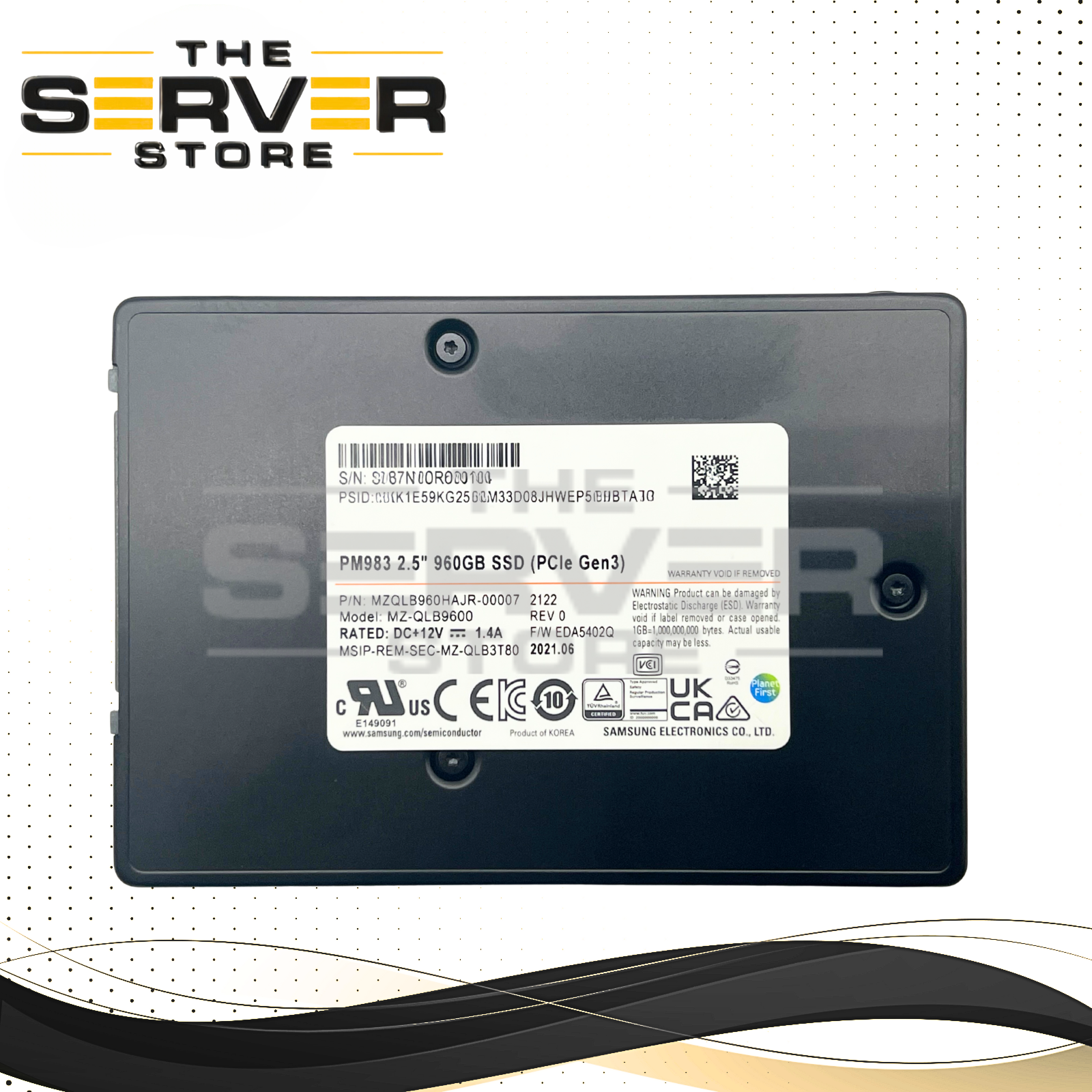
Samsung 960GB NVMe U.2 PCIe Gen 3.0 x4 2.5" 7MM RI SSD PM983 Series MZQLB960HAJR
Related Part Numbers: MZQLB960HAJR-00007, MZ-QLB9600, MZ-QLB960N
Overview
The Samsung PM983 MZQLB960HAJR is a 960GB enterprise-class NVMe SSD, designed for read-intensive (RI) workloads in cloud, hyperscale, and data center environments. Built with Samsung’s advanced 3D V-NAND TLC technology, it delivers high performance, low latency, and strong reliability in a compact 7mm 2.5-inch U.2 form factor.
Core Specifications
-
Manufacturer: Samsung
-
Series: PM983
-
Model / Part Number: MZQLB960HAJR
-
Capacity: 960 GB
-
Form Factor: 2.5-inch Small Form Factor (SFF), 7mm thickness
-
Interface: U.2 (SFF-8639) PCIe Gen 3.0 x4 NVMe
Performance & Speed
-
Flash Memory Type: Samsung 3D V-NAND TLC
-
Sequential Read Speed: Up to 3,000 MB/s
-
Sequential Write Speed: Up to 1,050 MB/s
-
Random Read (4KB): Up to 400,000 IOPS
-
Random Write (4KB): Up to 40,000 IOPS
-
Average Latency: ~15 μs
Endurance & Reliability
-
Workload Type: Read-Intensive (RI)
-
Endurance (DWPD): ~1.3 Drive Writes Per Day (3-year rating)
-
Total Bytes Written (TBW): ~1,366 TBW
-
MTBF (Mean Time Between Failures): 2,000,000 hours
Data Protection Features
- AES 256-bit hardware encryption
- Power-loss protection (PLP with onboard capacitors)
- End-to-end data protection
Power & Environmental
-
Operating Voltage: 12V ± 8%
-
Active Power Consumption: Up to 10.6 Watts
-
Idle Power Consumption: ~4.0 Watts
-
Operating Temperature: 0°C to 70°C
-
Weight: ~70g
Physical & Deployment Features
- Hot-swappable U.2 drive design
- Compatible with enterprise servers and storage arrays
- Optimized for:
- Content delivery networks (CDN)
- Boot drives and web servers
- Big data analytics (read-heavy)
- Virtualization environments
Positioning vs Enterprise SSD Classes
-
PM983 (This Drive): Read-Intensive (RI), cost-efficient
-
PM1725b: Mixed-use, higher endurance and performance
-
PM1735: High-performance/next-gen workloads
Summary
The Samsung PM983 960GB (MZQLB960HAJR) offers a strong balance of performance, efficiency, and reliability for read-heavy enterprise applications. Its NVMe interface and solid throughput make it ideal for scalable data center deployments while keeping power and cost optimized.