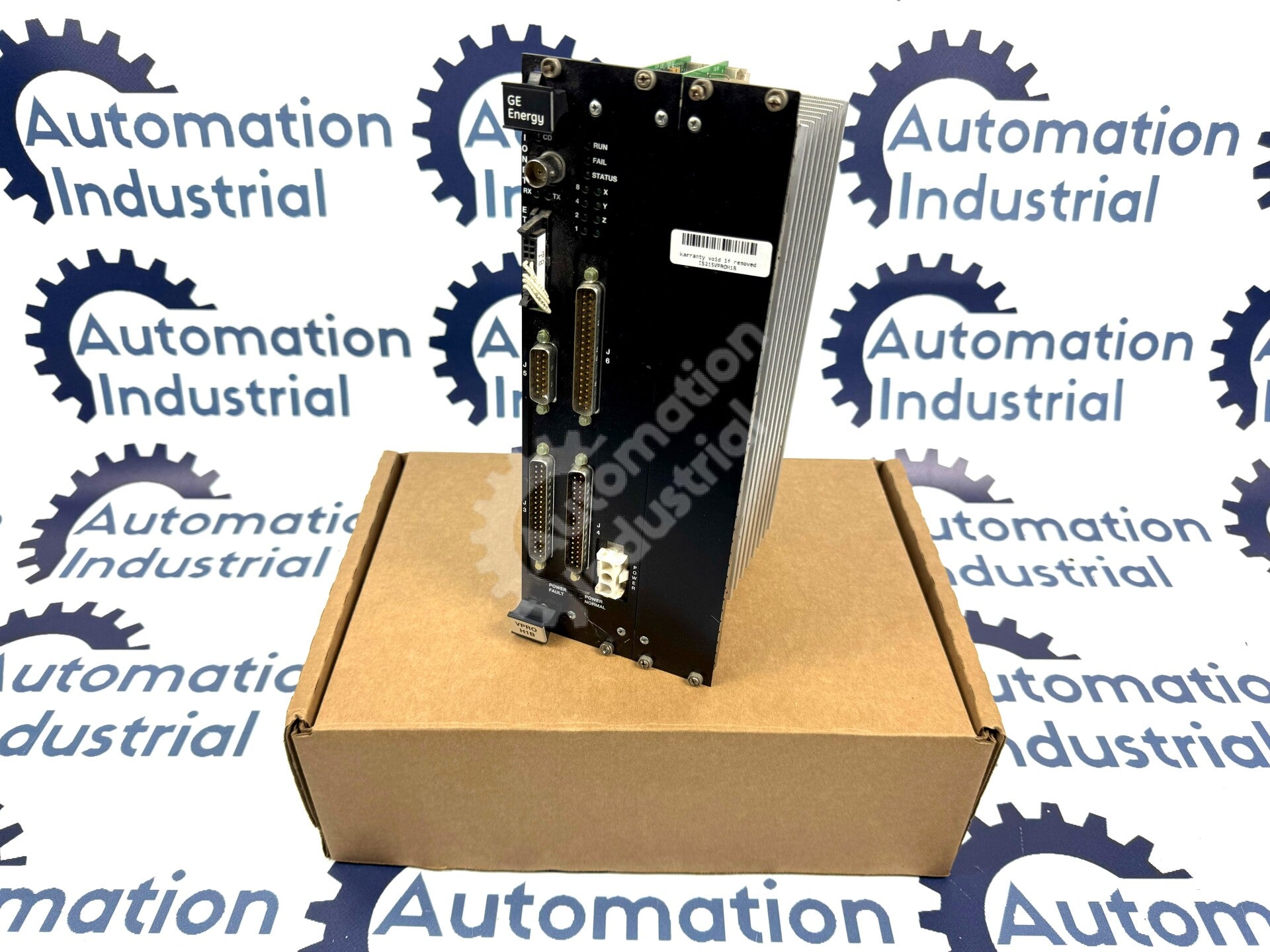
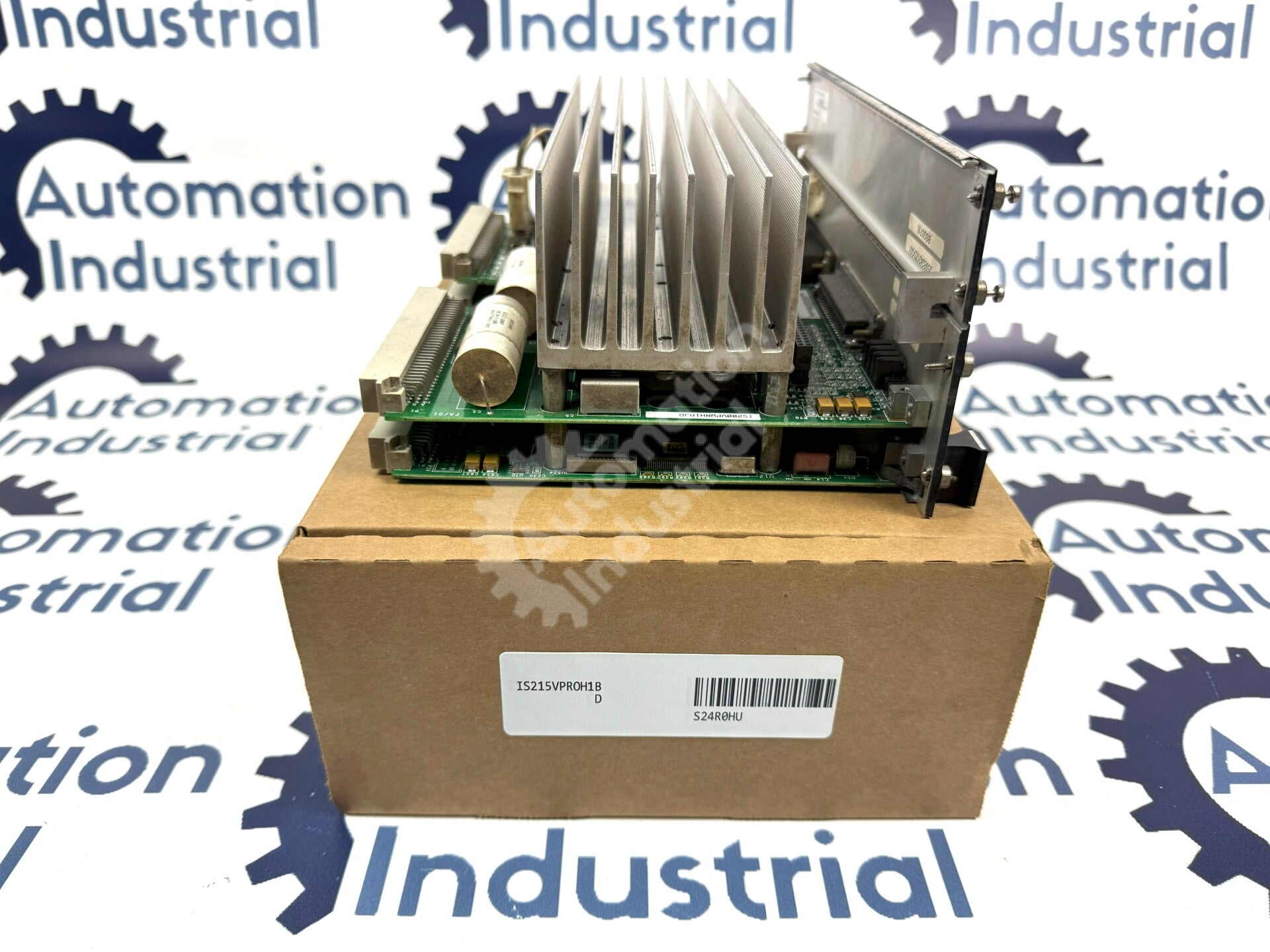
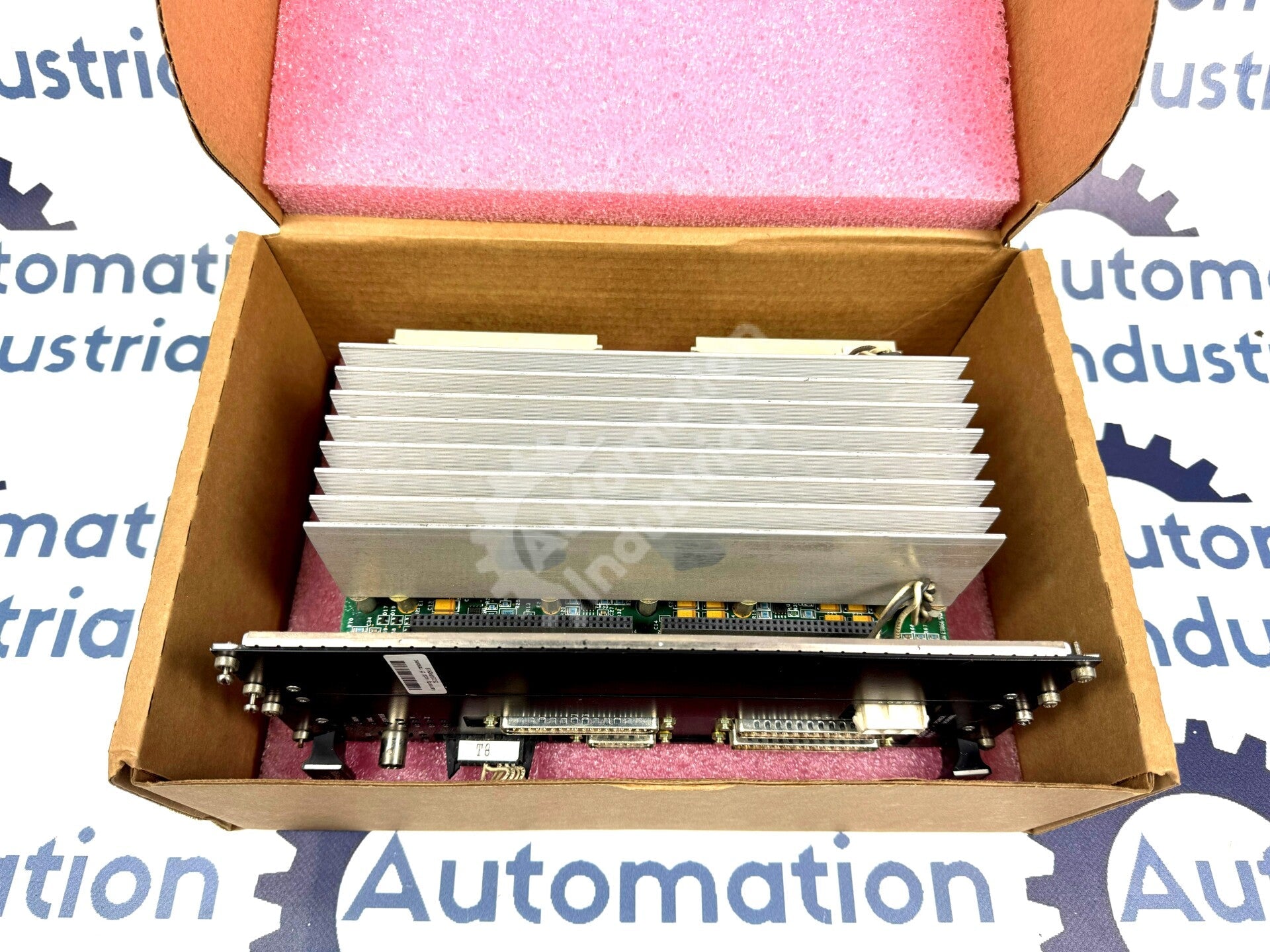
Overview: IS215VPROH1B Turbine Protection Module
Every Mark VI-controlled turbine that doesn't rely on a mechanical overspeed bolt uses a set of three VPRO boards for emergency protection, and the IS215VPROH1BD is one member of that family. Its function is narrow and specific: monitor for an overspeed condition independently of the turbine's normal control system, and drive the trip solenoids if the turbine needs to be shut down immediately.
That independence is deliberate. The VPRO cores don't rely on the same processors, power feeds, or logic as the <R>/<S>/<T> control cores, so a problem in turbine control shouldn't blind the protection system, and vice versa.
Inside the Mark VI Protection Rack
The three VPRO boards form what's often called the <P> core, the protection module, separate from the VME rack that holds the VCMI, UCVE, and I/O boards. Each VPRO channel has its own power feed from the PD (power distribution) core and communicates back to the rest of the system over IONet rather than the VME backplane. The VCMI board is the bridge: it moves IONet traffic between the VPRO channels and the UCVE processor, since VPRO and UCVE never communicate directly.
On the trip side, VPRO works with the TREG and TPRO terminal boards. TREG provides the positive connection to the trip solenoids, TPRO the negative, and the turbine can be tripped from either terminal board — a hardwired layer of redundancy that sits underneath the VPRO logic itself.
Before You Buy: Isolating a VPRO Fault
Not every alarm that mentions VPRO means the VPRO board has failed. A few things are worth checking first:
- Confirm the PD-core switch and fuse feeding that specific VPRO channel. A board with no LEDs lit at all is sometimes a power feed problem rather than a dead card.
- Check whether the alarm is isolated to one channel or showing up across all three VPRO/VCMI channels — a shared IONet, cabling, or grounding issue can look like multiple simultaneous board failures.
- If the board was manufactured between May 2006 and February 2009, ask about GE TIL-1905, which documents an oxidized-socket transceiver chip issue that can cause intermittent communication faults resembling a board failure.
- Rule out RF interference, grounding problems, corrosion, and condensation in the cabinet — all documented, real-world causes of intermittent VPRO and VCMI diagnostic alarms.
This is deliberately diagnostic guidance, not a trip-test procedure. For anything related to actually testing or verifying the overspeed trip function, follow GEH-6421 and your site's approved test procedure.
What the H1BD Suffix Tells You
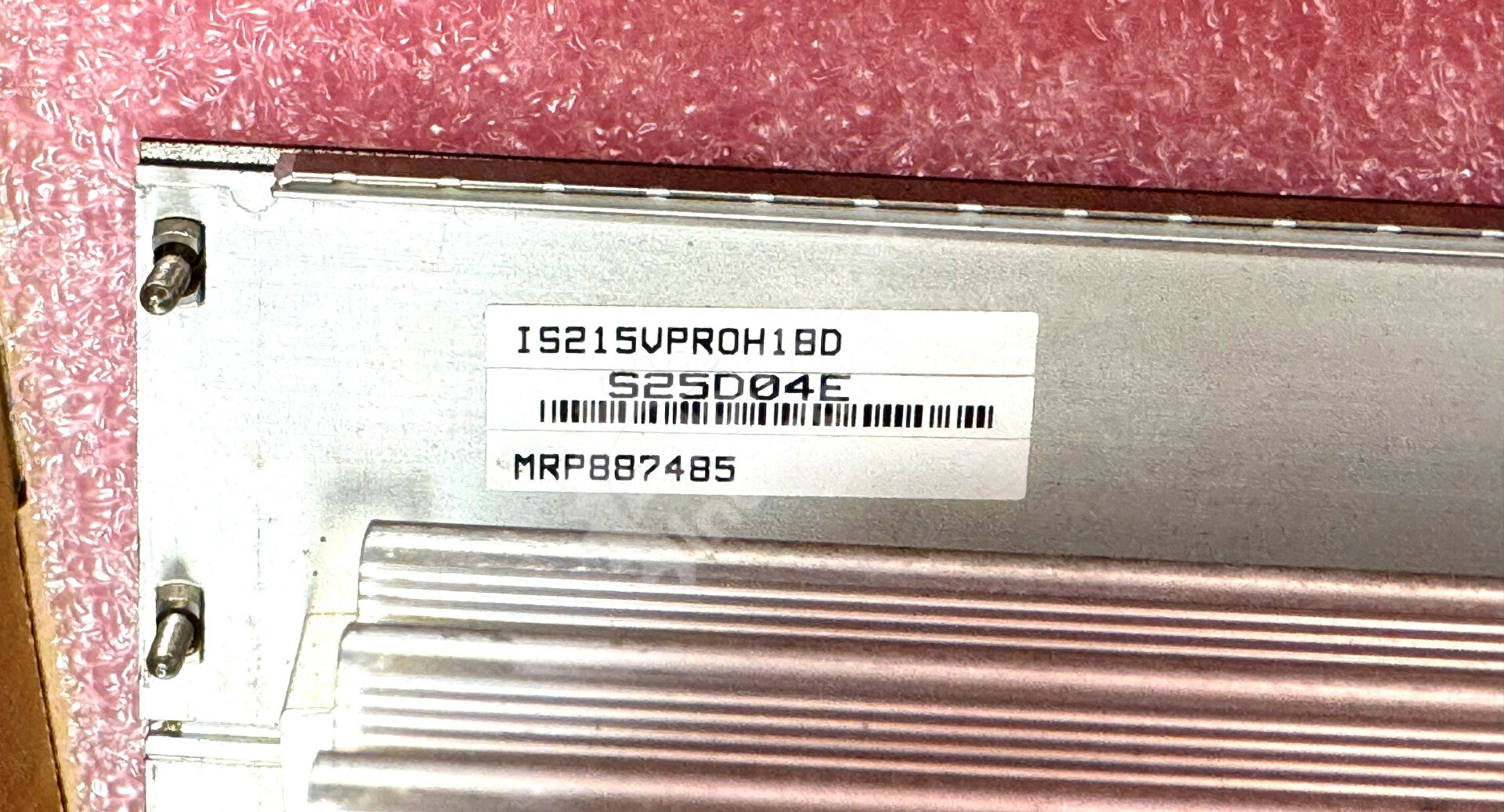
IS215 is the Mark VI assembly family, VPRO the function, H1 the design group that supports a second TREG board (unlike the lower-power H2 design, which supports only one), and D the specific revision. Revisions are meant to be matched, not mixed casually — if you're unsure whether D is correct for your configuration, send a photo of your existing board's label and we'll verify before you order.
Related Boards in the Speedtronic Lineup
If this VPRO came out during a broader Mark VI outage, our GE Speedtronic Part Number Decoder will help you read any other board you pulled, and Mark V vs Mark VI: DS200 to IS200 is useful if your site still runs a mix of generations. See the rest of the family in GE Mark VI IS200 Boards.
Quote Requirements for IS215VPROH1BD
- Full part number with suffix and revision (IS215VPROH1BD)
- Photo of the board label from the unit you're replacing
- Turbine model and Mark VI configuration
- Quantity and urgency
Request Your Quote
This unit is used, cleaned, and tested, with a 1-year warranty. We ship worldwide on a DDP basis, accept purchase orders, and get quotes back to you within 24 hours. Click Request a Quote — we don't publish prices, since every quote depends on your exact board and timeline.
General Information about the Product |
Part Number |
IS215VPROH1B Mark VI IS215 |
Description |
IS215VPROH1B By GE IS215VPROH1BD Emergency Turbine Protection Board MK VI IS215 |
Condition |
used Cleaned and Tested. With 1 Year Warranty. |